
Transforming Tenable.io:
Designing the 3-Year Product Vision
From ambiguous ideas to executive-approved strategy in just 2.5 weeks
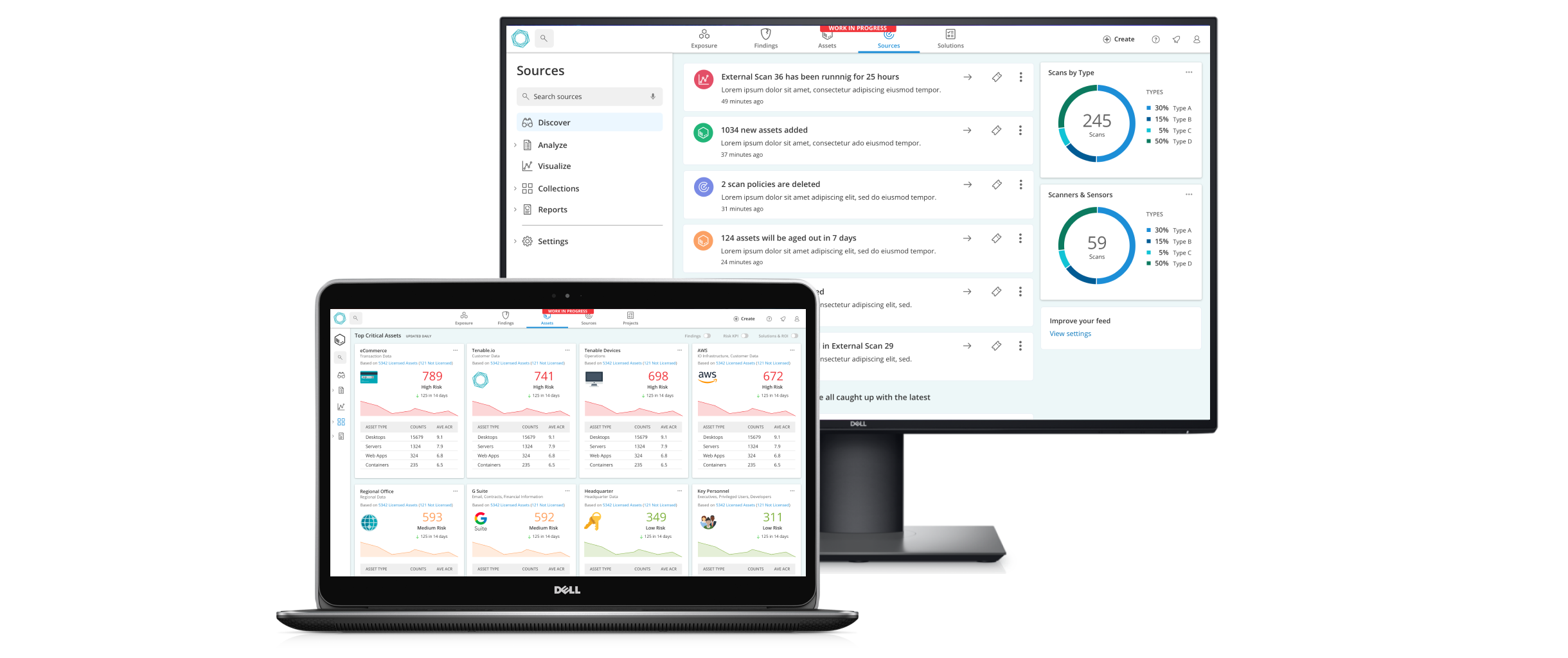
Executive Context
In 2020, Tenable.io was a market leader in vulnerability management.
But market dynamics were shifting rapidly. Cloud adoption accelerated, data volumes increased, and competitors were repositioning around broader “cyber exposure” narratives. Incremental features would not maintain leadership. The platform needed a cohesive long-term direction.
The CTO assembled a small cross-functional group to define a three-year product vision and present it at the company all-hands.
I led design for this initiative.
Timeline: 2.5 weeks.
My Role
As Principal Product Designer, I led the end-to-end design direction for the three-year platform vision. I partnered directly with the CTO, Chief Data Architect, VP Product, and VP Engineering to translate high-level strategy into a coherent architectural model and interaction framework.
The work required aligning competing priorities across product and engineering while clarifying the long-term experience direction under a 2.5-week timeline.
The Problem: Fragmented Product Narrative
By 2020, Tenable.io was strong at detecting vulnerabilities, but the product experience reflected its origins. Navigation mirrored internal scanner architecture. Findings were presented as isolated events. Data lived in parallel workspaces with limited connective tissue. Customers could identify issues, but struggled to answer broader questions:
What is the current state of my environment?
How is risk trending over time?
Where should I act first?
The platform was optimized for data visibility; it did not optimize for decision-making.
The strategic question became:
How might Tenable evolve from a detection tool into a unified exposure platform grounded in state and business context?
The Process
-
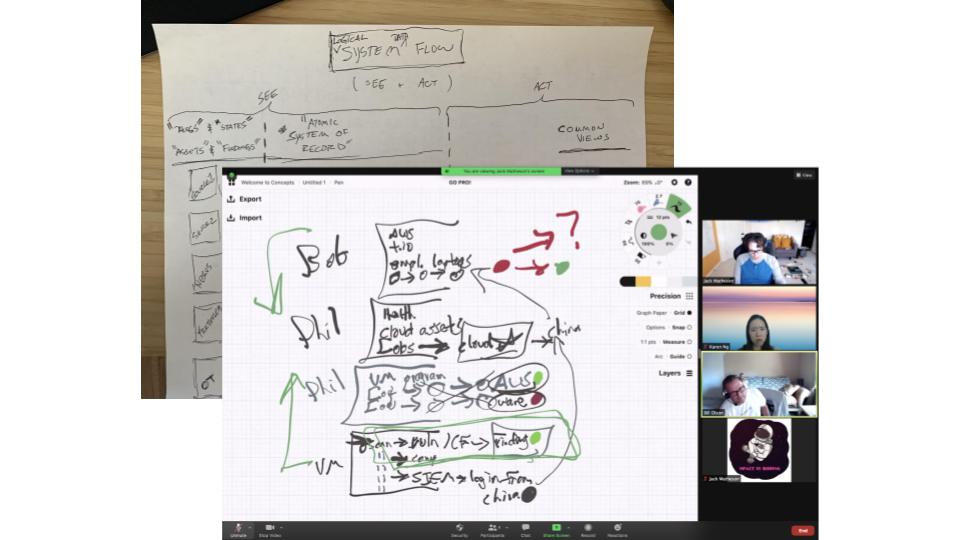
Brainstorming Sessions
To clarify the long-term direction, I facilitated structured working sessions with executive stakeholders. These conversations surfaced competing narratives, from expanding scanner capabilities to repositioning around exposure. My role was to synthesize these inputs into a coherent experience model.
-
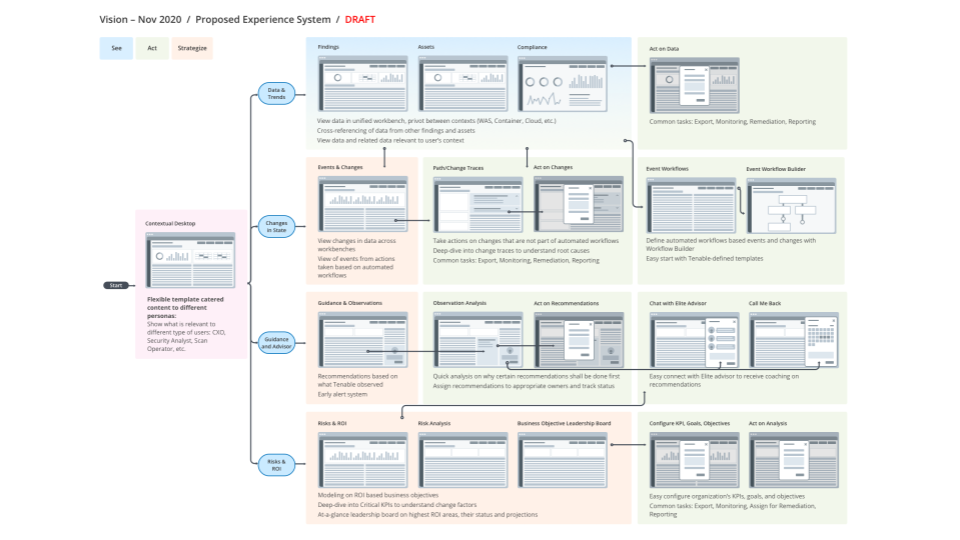
Experience Map & Narratives
I translated strategic goals into persona-based experience maps. These maps exposed disconnects between operational workflows and executive reporting needs, forming the foundation of the platform model.
-
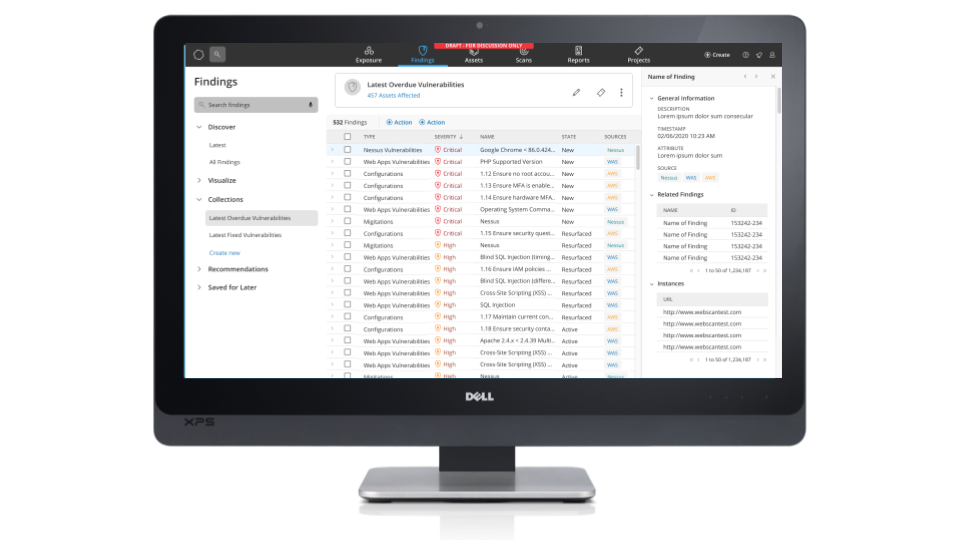
Wireframes & Iterative Reviews
Early prototypes were reviewed in two executive sessions, where we iterated on navigation structure and state modeling. The focus was not visual refinement but architectural coherence.
-
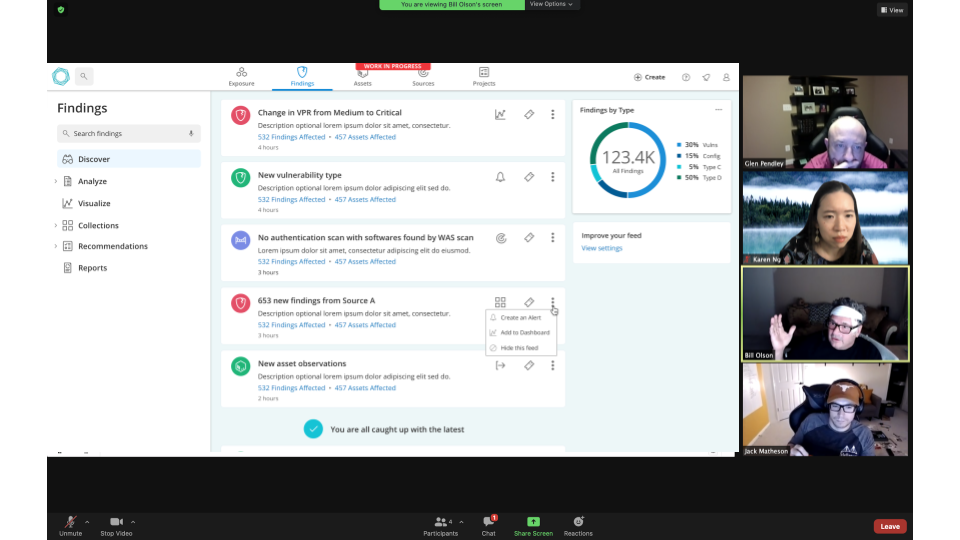
Concept Testing with Customer Advisory Board
We validated direction with members of the Customer Advisory Board to assess concept and feature value.
-
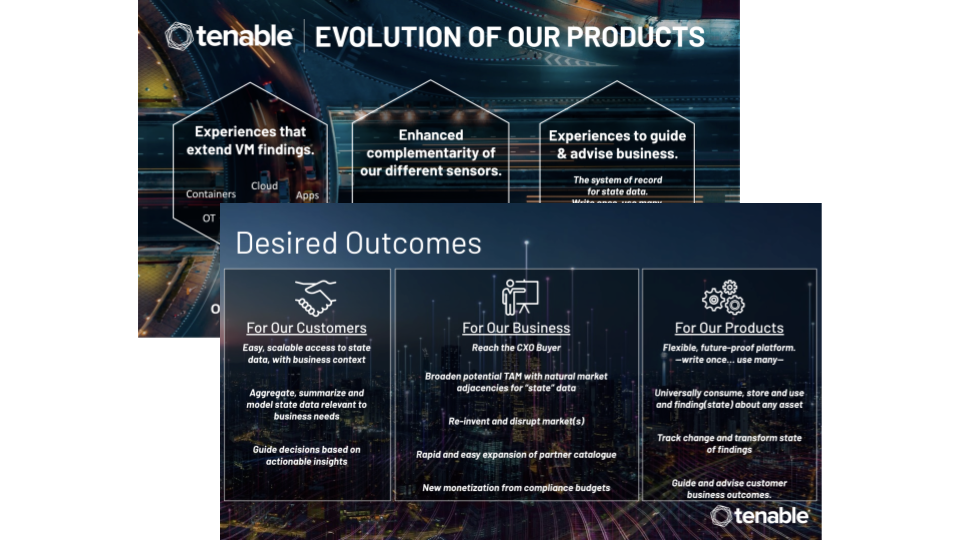
Executive Presentation
We presented design to executives to receive final approval to the concept design.
Reframing the Platform
We shifted the model from:

This shift required architectural clarity. Instead of organizing the product around scanners and modules, we proposed a unified workspace capable of aggregating multi-source state data and modeling exposure over time. We introduced persistent navigation across workspaces and modeled exposure around state change rather than static vulnerability lists.
Strategic Trade Offs
We consciously rejected incremental dashboard improvements in favor of a structural shift toward a unified platform architecture. While this increased short-term complexity, it created a scalable foundation. Navigation was reorganized around user intent and business context rather than internal module boundaries. This required rethinking information hierarchy and cross-data relationships. Given the 2.5-week constraint, we prioritized architectural clarity over exhaustive discovery, validating direction through subsequent Customer Advisory Board feedback.
The Vision
Evolve Tenable.io beyond vulnerability management
The proposed direction positioned Tenable.io as a system of record for exposure state.
Customers would no longer move between disconnected modules to piece together insight. Instead, they would operate within a unified environment that surfaced state change, asset relationships, and business context in one place. Operational teams could investigate exposure in depth. Executives could understand risk posture without exporting spreadsheets. The platform would support both day-to-day remediation and long-term strategic oversight within a shared architectural framework.
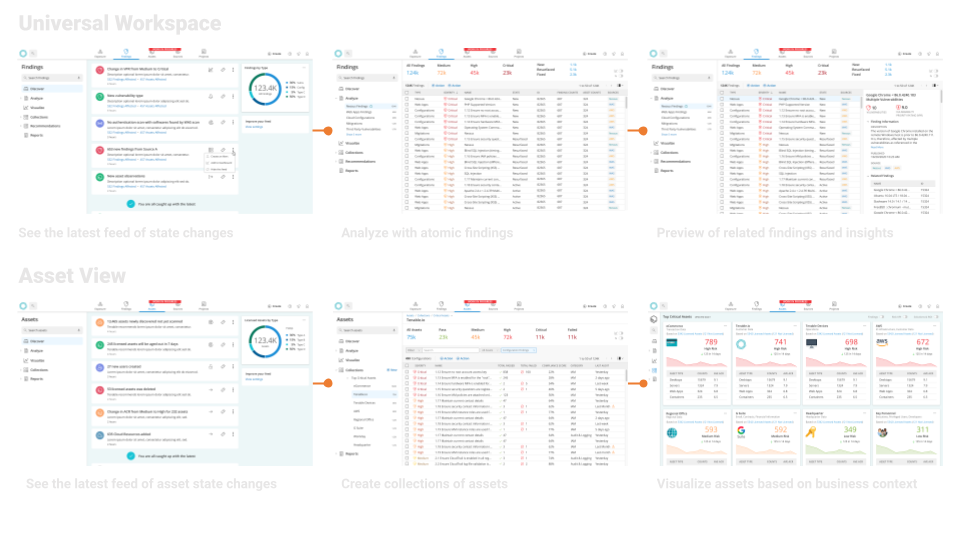
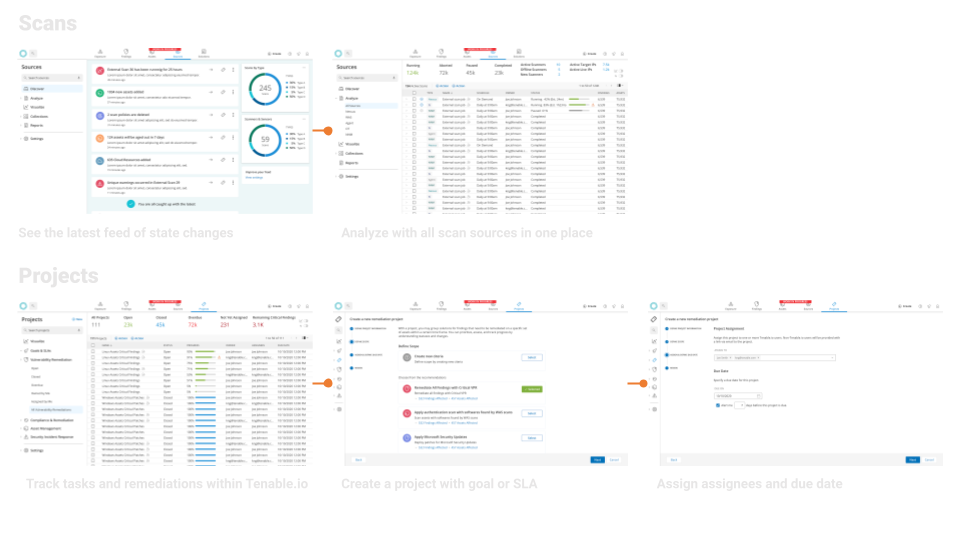
The direction repositioned Tenable from a detection tool toward a strategic exposure platform.
-
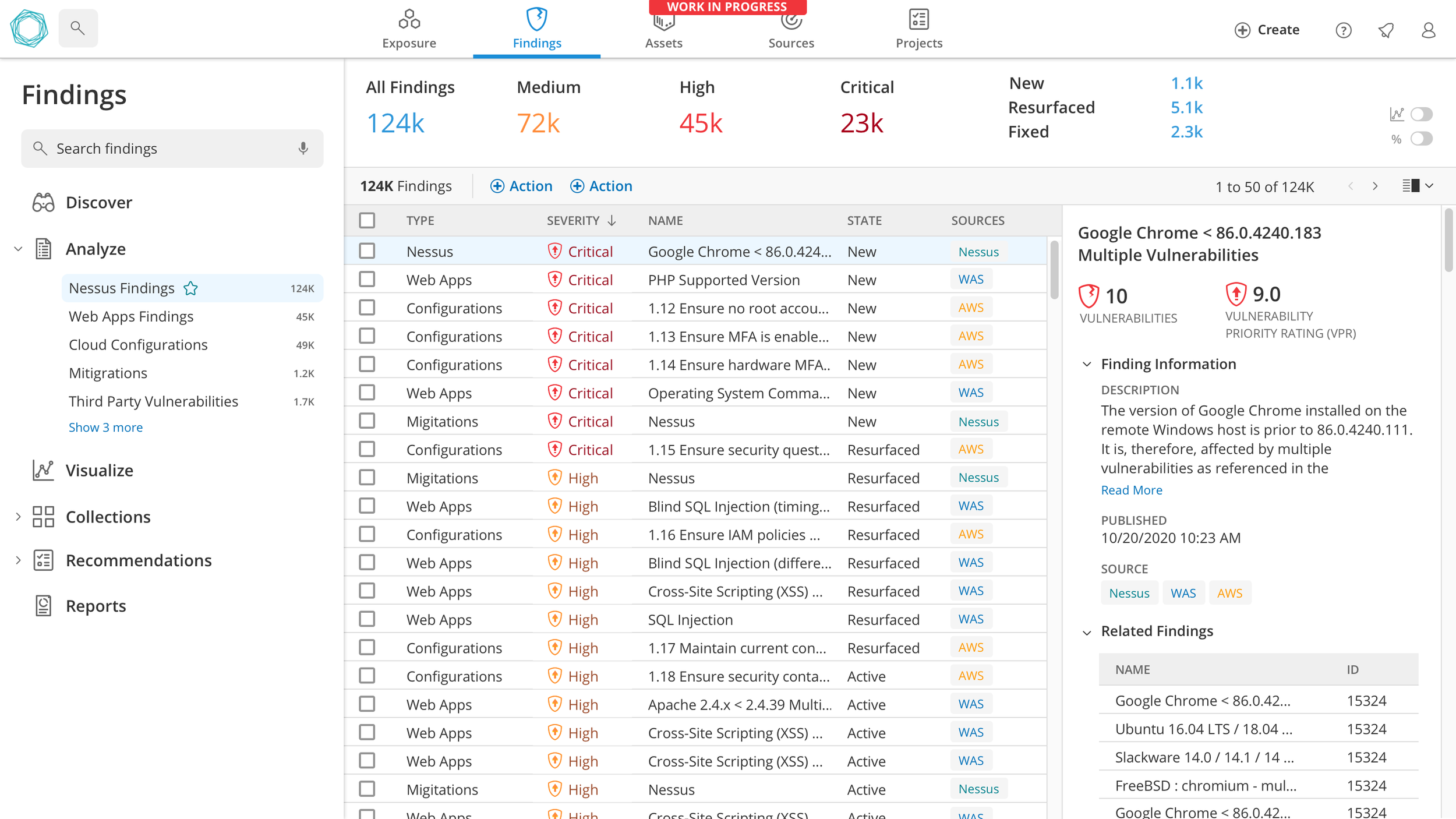
Unified Navigation
Unified navigation and user interface allows multiple workspaces and data source into a single place.
-
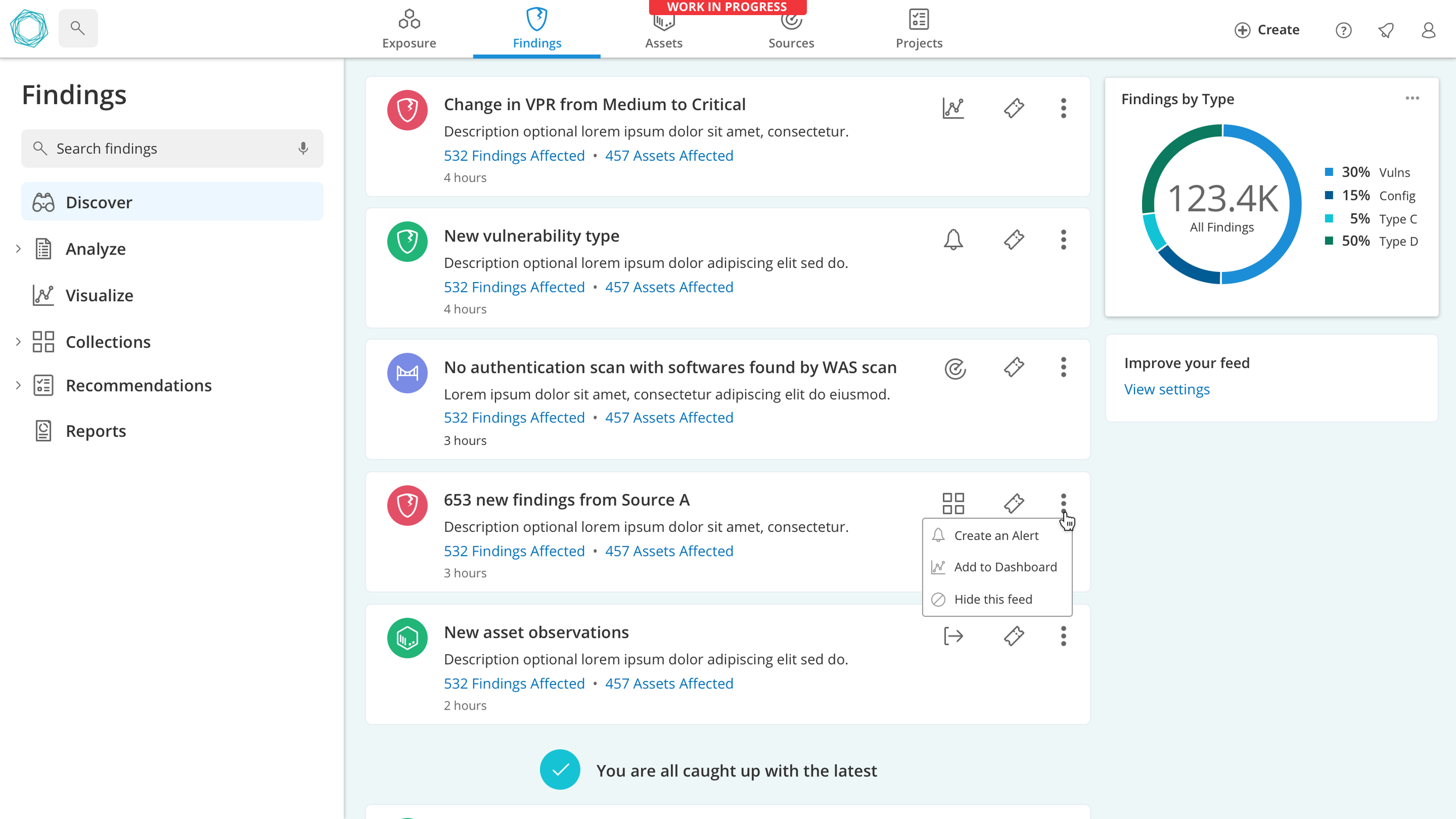
Information Feed
A high-level view of assets grouped by business context allows CISO to quickly understand how each area is trending without going through spreadsheets of data.
-
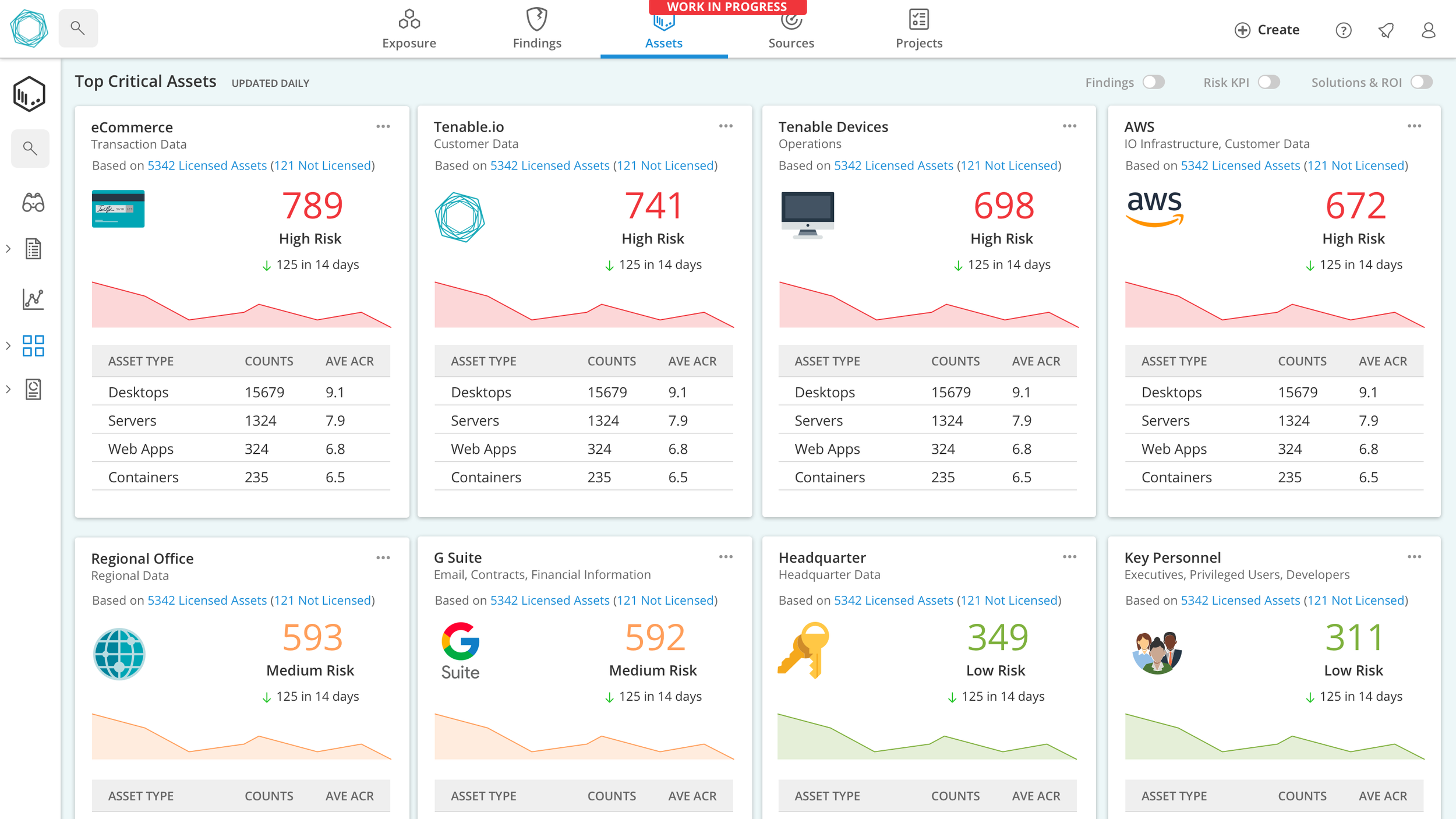
Assets by Business Context
Instead of exporting millions of data daily to analyze the data, Information feed provides an easy way for users to find the delta.
Outcome & Impact
The three-year vision was approved by the CEO, CTO, and executive board and presented at company's all-hands as the long-term product direction.
More importantly, it shifted internal conversations. Roadmap discussions began centering on architectural coherence rather than feature expansion. Navigation and information hierarchy principles introduced in this work influenced subsequent product evolution.
The project expanded the design’s role from interface delivery to a strategic partner in defining platform direction.
Reflection
Platform vision depends on architectural clarity, not interface polish. Executive alignment requires translating strategy into tangible experience models. Speed does not preclude rigor when grounded in systems thinking and prior research.