
Unifying Cancer Care:
Concept Discovery for Roche NAVIFY® Oncology Workflow
How research and design shaped a new product to streamline oncology decision-making

TL;DR
Led 0→1 concept discovery for Roche NAVIFY Oncology Workflow, defining a unified clinical decision-support layer across fragmented oncology systems.
Through research with 90 providers across the US and EU, I reframed the product from a tumor-board extension to a longitudinal workflow platform, shaped MVP scope under technical constraints, secured executive alignment, and enabled funding for product development.
The Problem
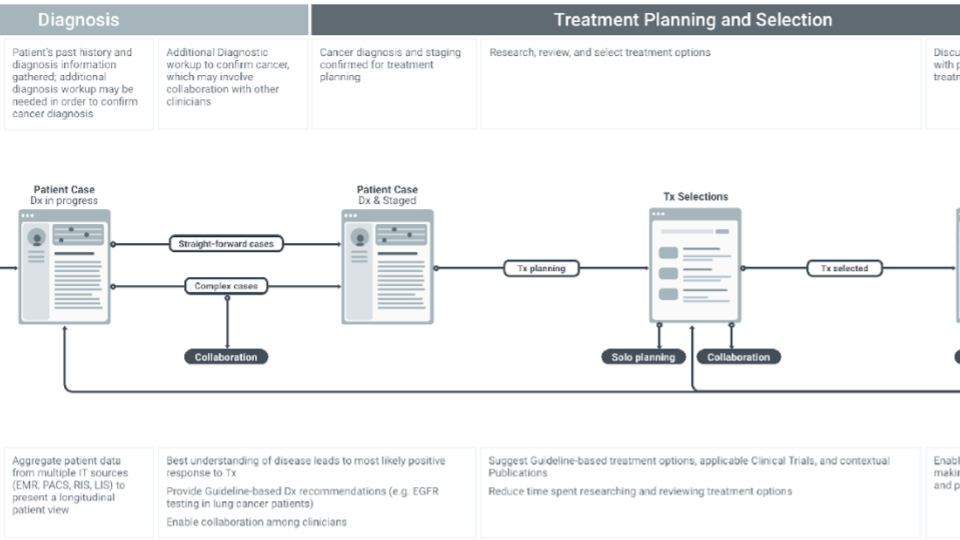
Oncology decision-making spans diagnosis, staging, treatment planning, monitoring, and collaboration across care teams. Yet these workflows are distributed across disconnected systems: EMRs, tumor boards, guideline databases, and clinical trial platforms. Clinicians must manually aggregate data before making high-stakes treatment decisions. The gap was workflow coherence.
The question became:
How might we design a unified workflow layer that supports longitudinal oncology decision-making across the patient journey?
My Role
As the lead designer on this 0→1 initiative, I partnered with research and product to define the product thesis, workflow architecture, and MVP scope. I worked directly with senior leadership at Roche and GE Healthcare to align on positioning, technical feasibility, and portfolio strategy.
My focus was translating complex clinical workflows into a structured decision-support model that could scale within the NAVIFY ecosystem.
Discovery & Alignment
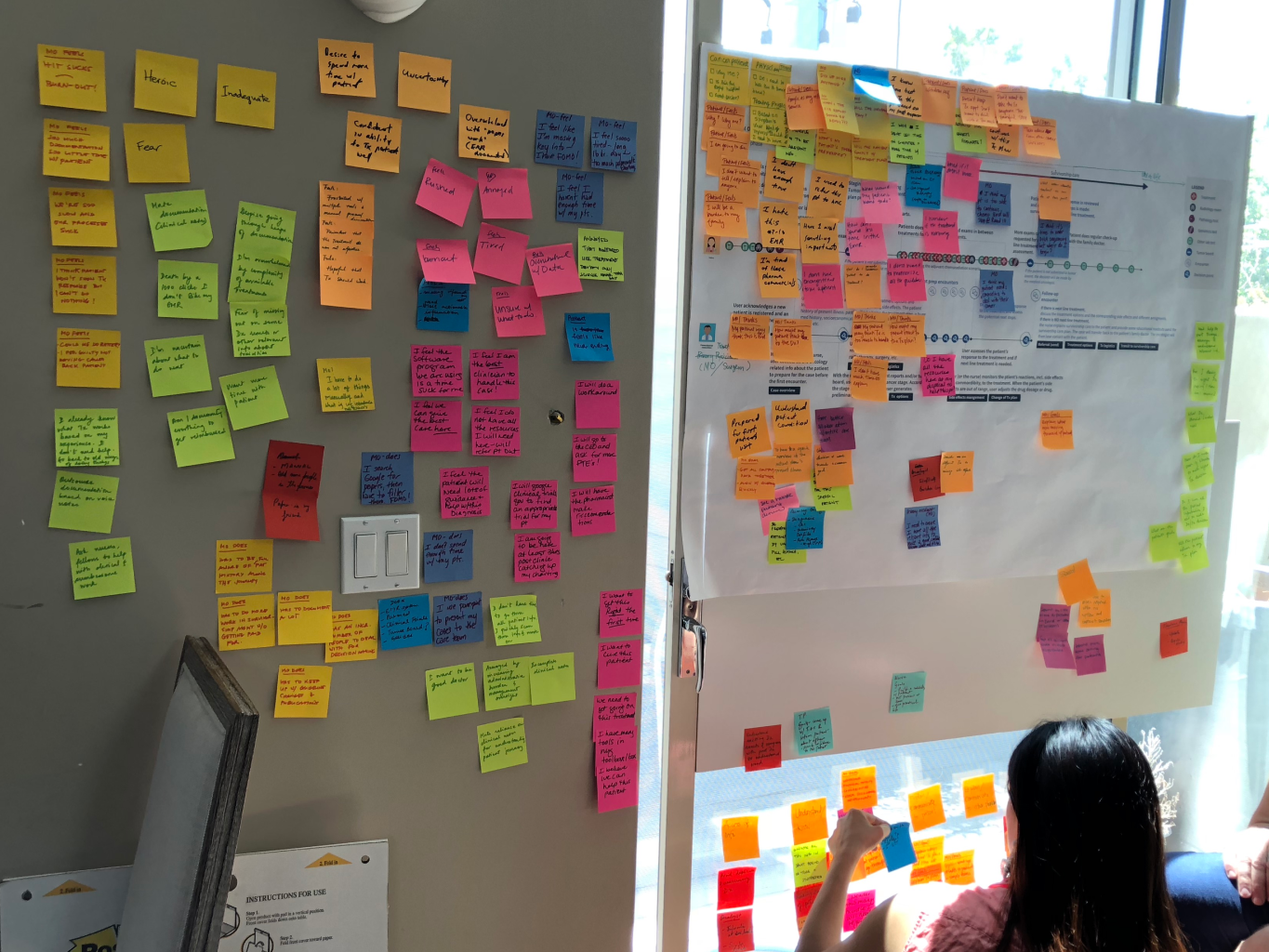
Over six months, we conducted research with 90 providers across the US and EU, mapping the oncology journey from diagnosis through treatment monitoring. Workshops with cross-functional stakeholders clarified business constraints, interoperability challenges, and portfolio positioning within NAVIFY.
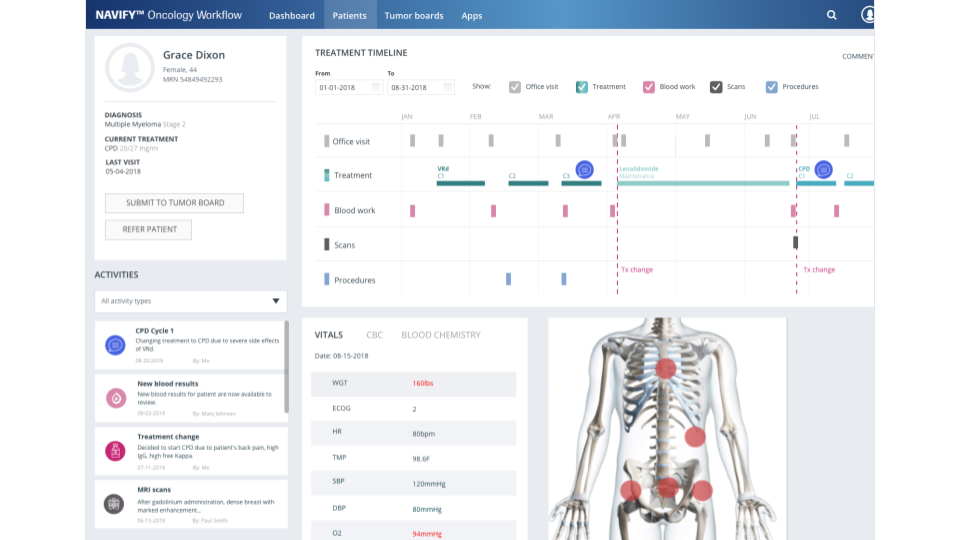
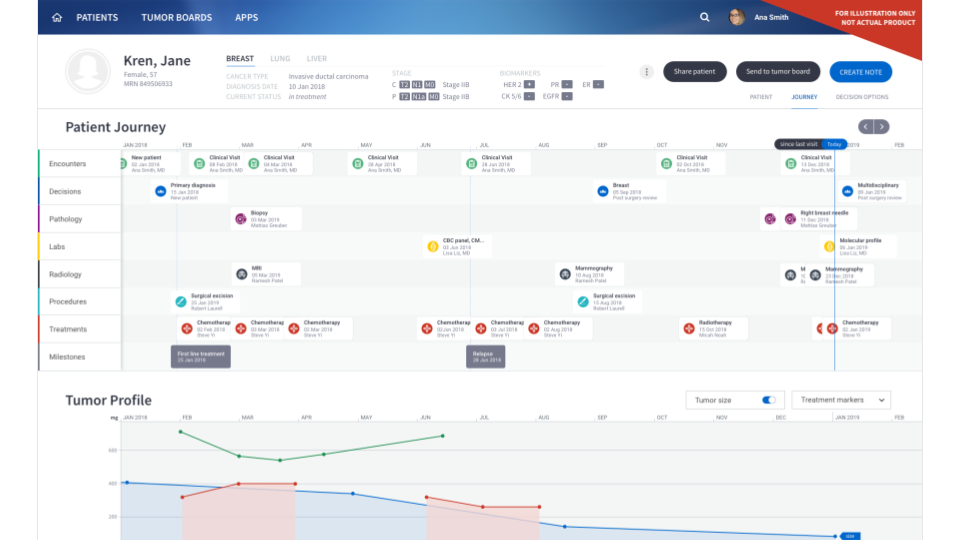
Through iterative concept testing, we identified a core tension: clinicians desired a longitudinal patient journey view, but technical integration made full implementation high-risk for an MVP.
-
Market Research
-
Design Thinking Workshop
-
Iterative Concept Testing
-
Product Design Strategy
-
Iterative Concept Testing
The Solution: Reframing the Workflow
An oncologist companion technology solution integrating patient’s cancer data in a single system and in a structured way
We designed a workflow layer that aggregates patient data into a structured, decision-oriented view. Rather than replicating the EMR’s patient list, we prioritized a Patient Summary that surfaces diagnosis context, recent changes, guideline recommendations, clinical trial eligibility, and decision pathways. This allowed oncologists to move from fragmented review to structured decision support within a single environment.
Strategic Scope Decision
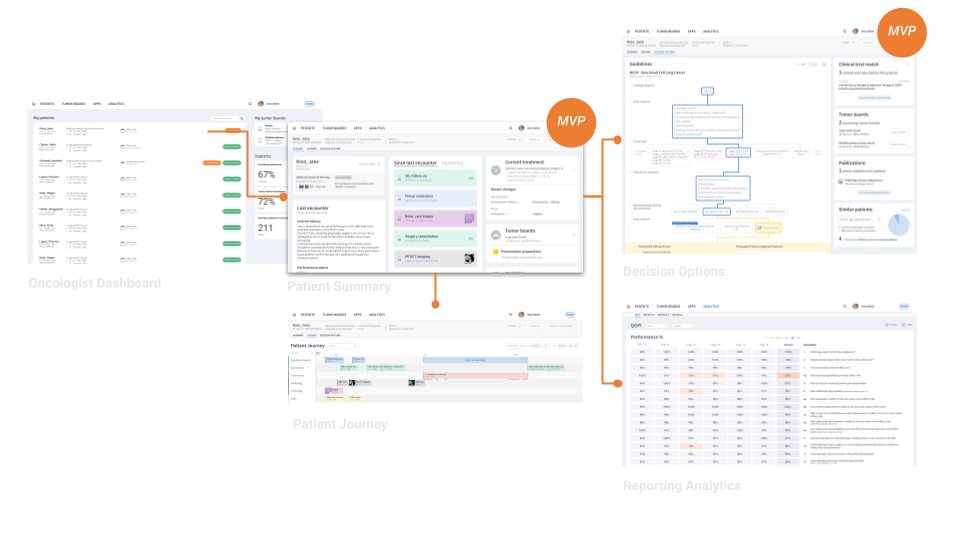
While the longitudinal journey visualization was the most compelling concept in testing, implementation complexity made it unsuitable for initial release. We deliberately prioritized the Decision Options view for MVP — delivering immediate clinical value while preserving a roadmap toward a comprehensive journey model. This balanced ambition with feasibility.
-
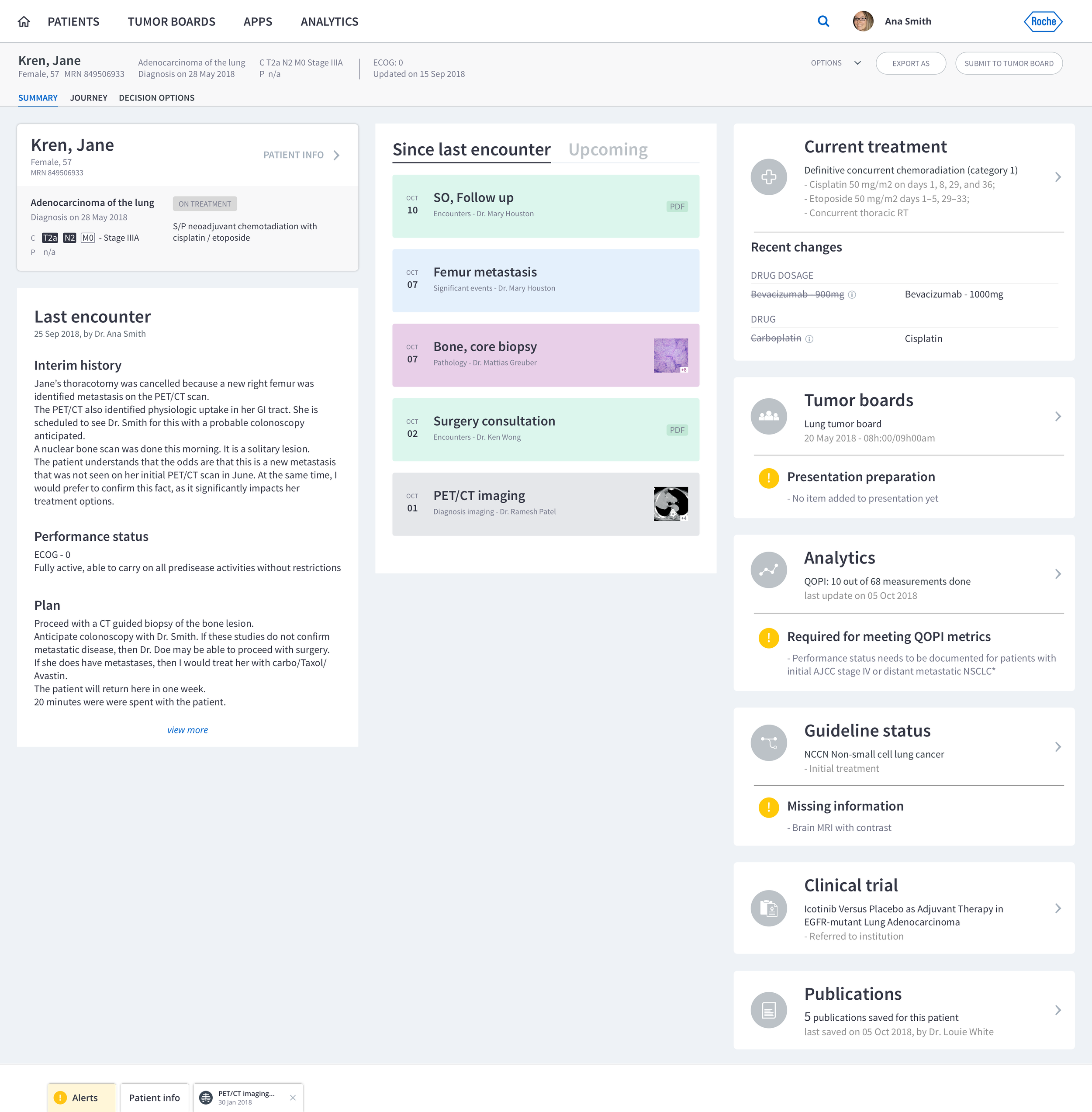
Patient List vs. Patient Summary
Most hospital’s electronic medical record systems are the single source of truth of displaying patient list; the MVP implementation of Patient Summary view was prioritized.
-
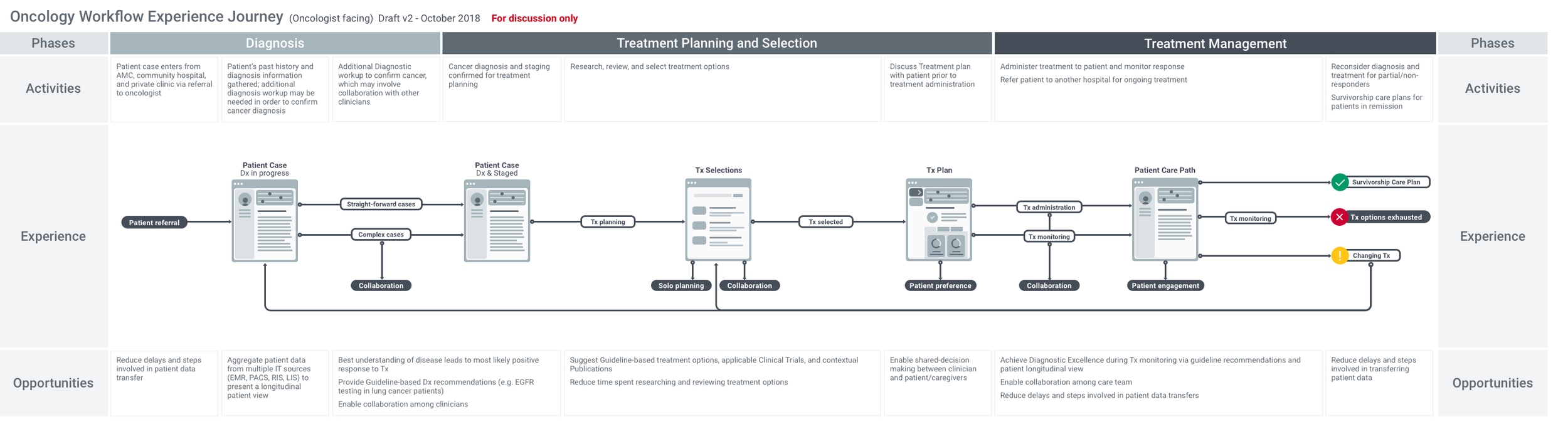
Elevating NAVIFY Decision Support capabilities
Experience Journey, Personas, and WireFlow created based on research data in order to drive alignment; bringing in other NAVIFY Decision Support capabilities are highly recommended.
-
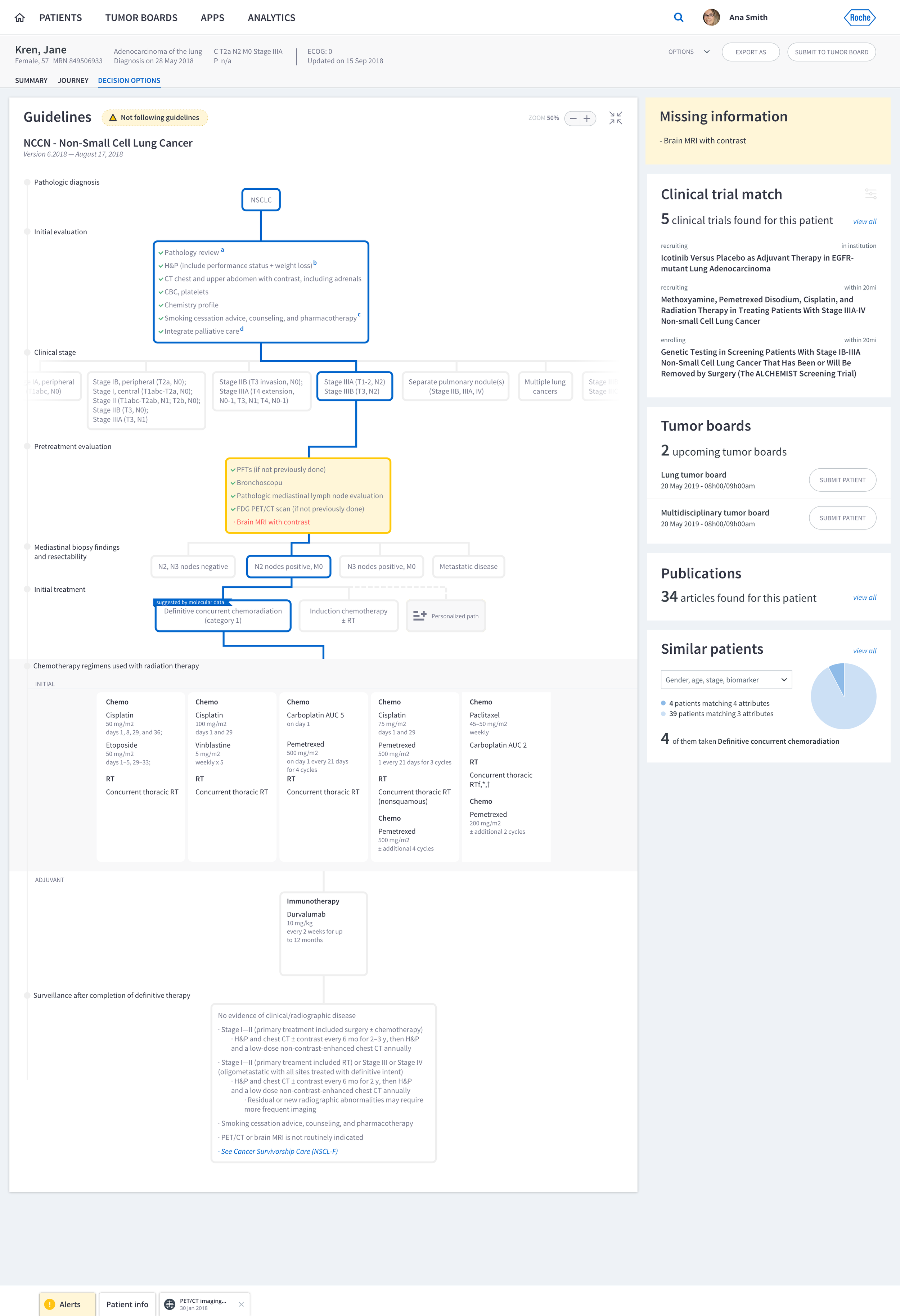
Displaying Patient Journey
Through concept testing, Patient journey was the most desired by users while implementation was the most challenging; the MVP implementation of Decision Options view was prioritized.
Outcome & Impact
The concept defined the MVP scope and clarified NAVIFY’s expansion beyond tumor boards into longitudinal workflow support. The work secured executive approval and funding to begin product development and established a strategic foundation for integrating decision support capabilities across the NAVIFY portfolio. This initiative positioned NAVIFY not as a single-step tumor board tool, but as a platform supporting end-to-end oncology workflows.