
Tenable.io Explore:
Defining the MVP for a Universal Workspace
Creating a unified product experience to replace fragmented workflows
TL;DR
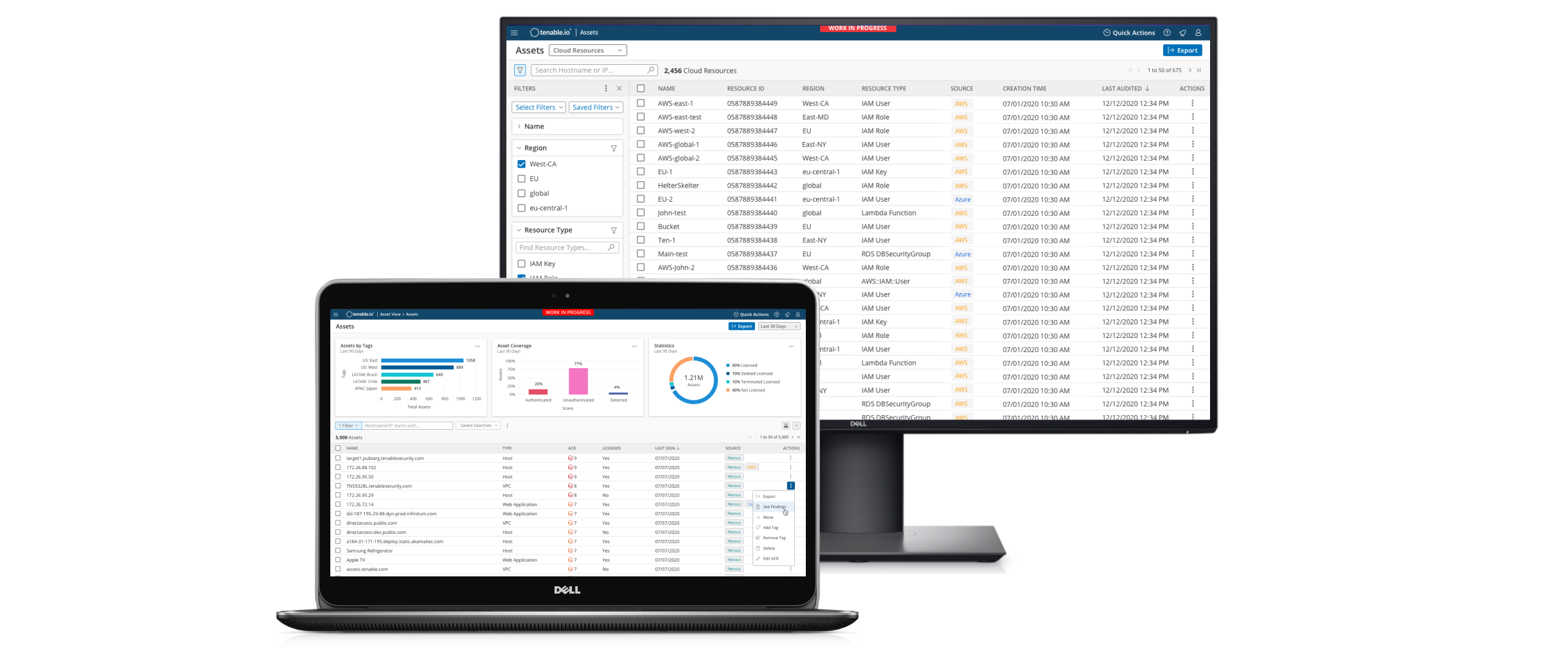
Led the definition and executive alignment of Tenable.io’s first Universal Workspace, unifying siloed product workspaces under a single data model and interaction layer. Delivered an implementable MVP in two weeks under extreme ambiguity, establishing UX as a core contributor in shaping platform direction.
Context
Tenable.io was a cloud-based vulnerability management platform composed of multiple product workspaces. Each workspace operated independently based on subscription boundaries. Assets and findings could not be viewed or correlated across workspaces, forcing customers to export data into spreadsheets for manual analysis before taking action. The fragmentation was not only inefficient but also constrained Tenable’s ability to evolve into a unified platform.
The opportunity was to define a Universal Workspace capable of consolidating assets and findings into a single, cross-product view. We were given two weeks to move from concept to an implementable MVP. No product priorities had been defined. The data model spanned multiple teams, and executive alignment had not yet been established.
My Role
I led the cross-functional effort to define the Universal Workspace MVP. This involved collaborating with two UX designers, the Senior Director of Product, Chief Data Architect, API Lead, and Engineering Lead.
I facilitated rapid alignment sessions leveraging prior research to define a tightly scoped MVP that demonstrated cross-workspace unification, preserved existing navigation paradigms, minimized engineering disruption, and established a scalable foundation.
This was the first time UX drove alignment on a cross-portfolio MVP at Tenable.
MVP: Defining the Platform Shift
Universal Workspace &
Unified Asset View
The Universal Workspace was not a surface-level UI enhancement. It represented a structural shift from isolated product views to a unified data experience. This unification required aligning data ownership, API boundaries, and interaction models across previously independent product teams. The core design objective was to allow users to assess and prioritize findings or assets through a single consolidated interface. This required introducing a unified asset and findings view capable of operating across multiple subscriptions and data sources. Rather than redesigning the entire navigation system, we introduced the Universal Workspace as a new, independent layer. This reduced delivery risk and enabled validation of the unified data model before committing to a portfolio-wide redesign. The decision balanced speed to market with long-term scalability.
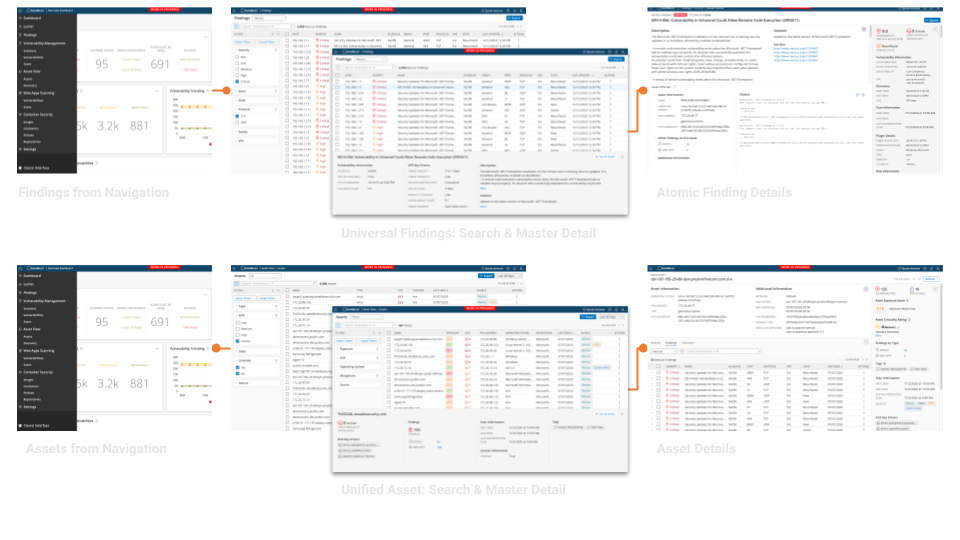
Architectural & Interaction Decisions
-
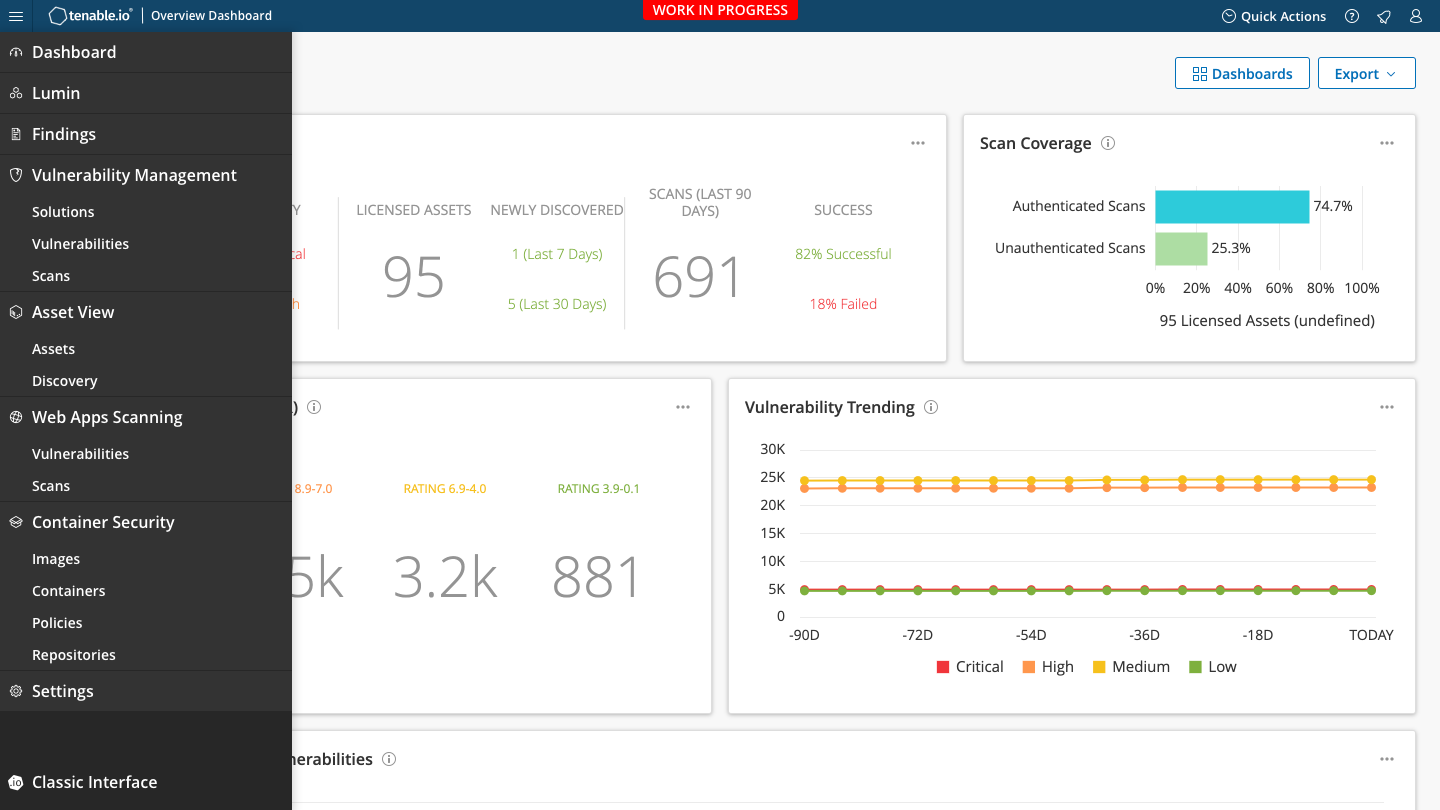
Unified Search & Master-Detail View
We centralized findings and assets into a consolidated search interface with contextual master-detail panels. This preserved navigational familiarity while enabling cross-workspace visibility.
-

Filtering at Scale
With millions of data points, filtering was reimagined to surface high-risk issues quickly. The goal was to isolate the “needle in the haystack” without requiring exports or manual manipulation.
-
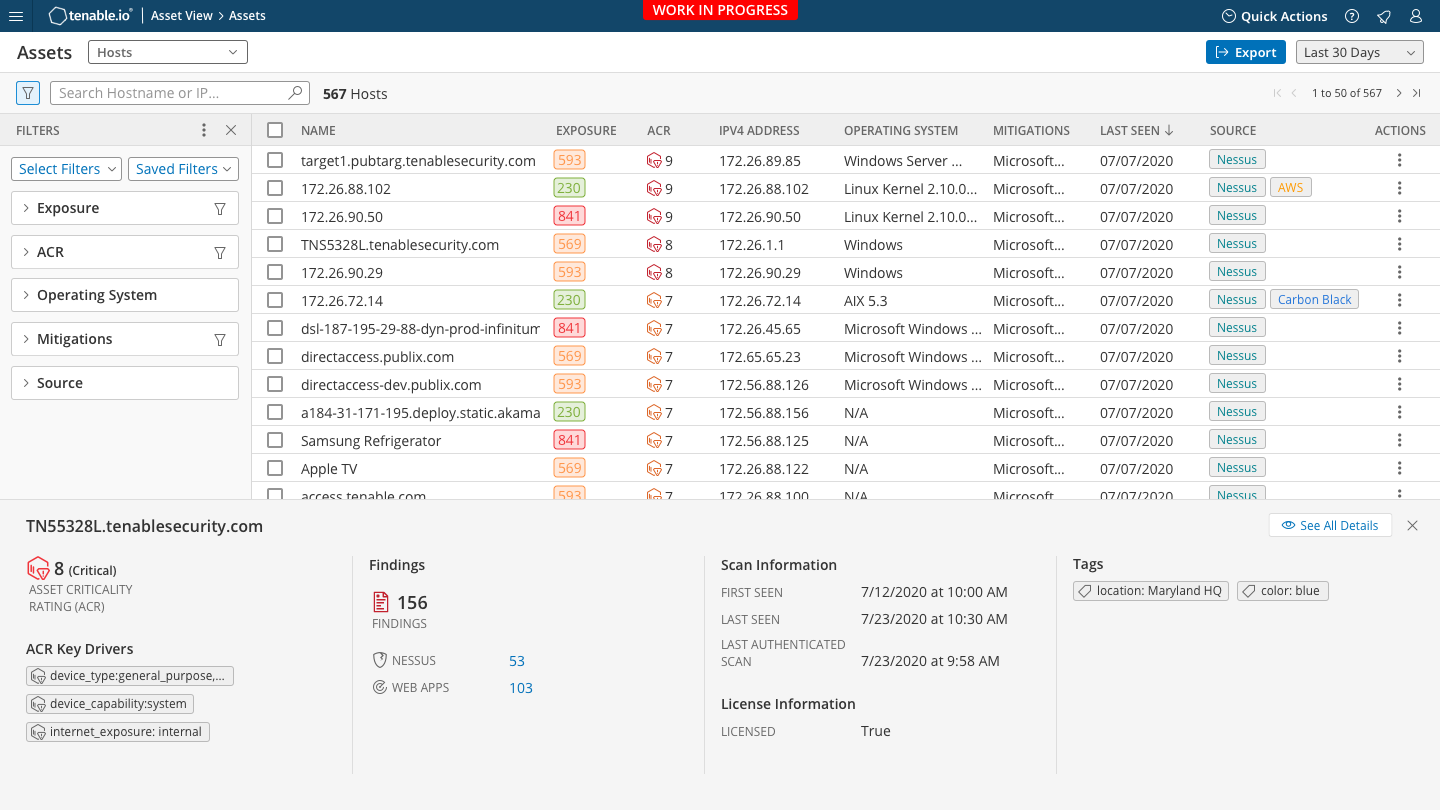
Split-View Navigation
To reduce performance concerns and prevent back-and-forth page loads, we introduced a split-view interaction model. Users could preview details while maintaining context within large datasets, improving continuity and speed.
MVP Under Constraint
Under a two-week timeline, the challenge was determining what not to build. I facilitated rapid alignment sessions leveraging prior research and stakeholder input to define a tightly scoped MVP that:
Demonstrated cross-workspace unification
Preserved existing navigation paradigms
Minimized engineering disruption
Established a scalable foundation
The result was an implementable design ready for engineering execution within the next quarter.
-
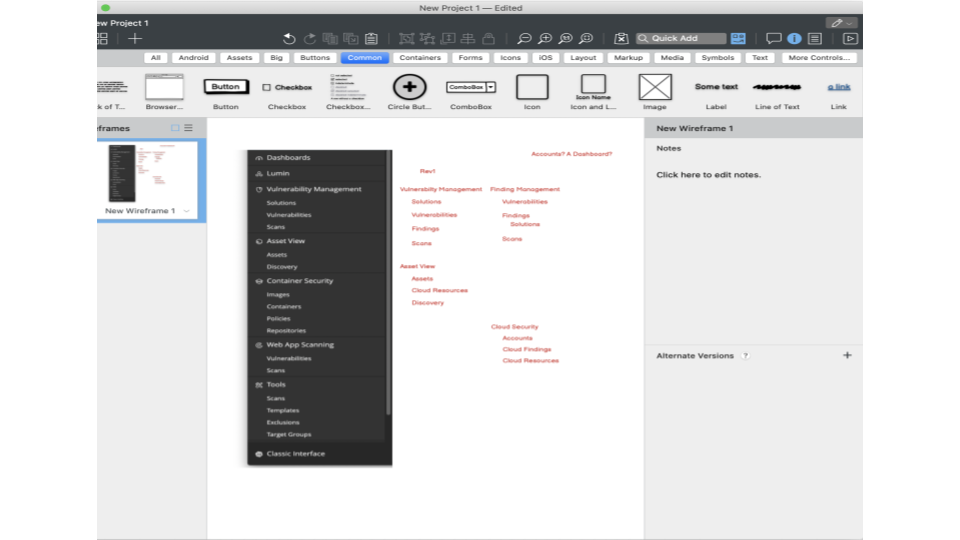
Brainstorming Sessions
-
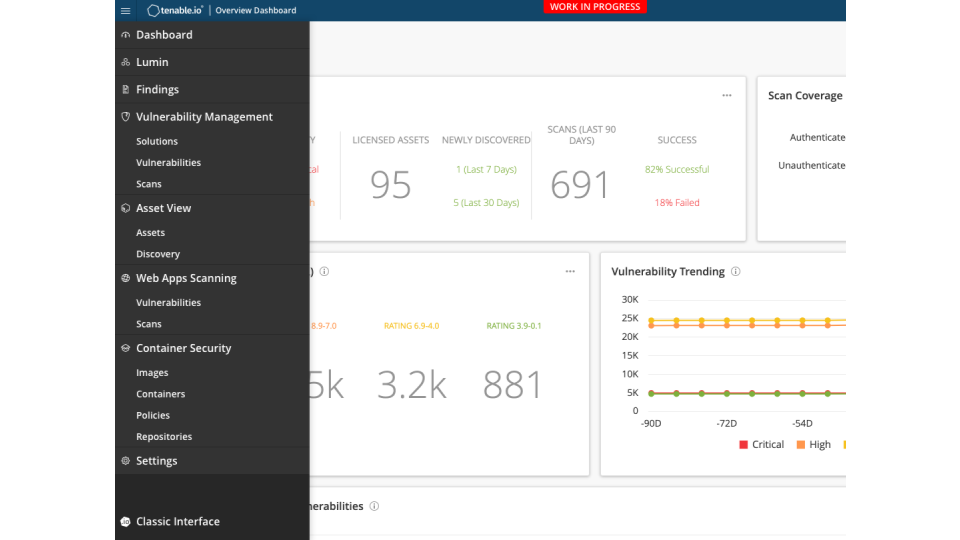
Iterative Design Reviews
-
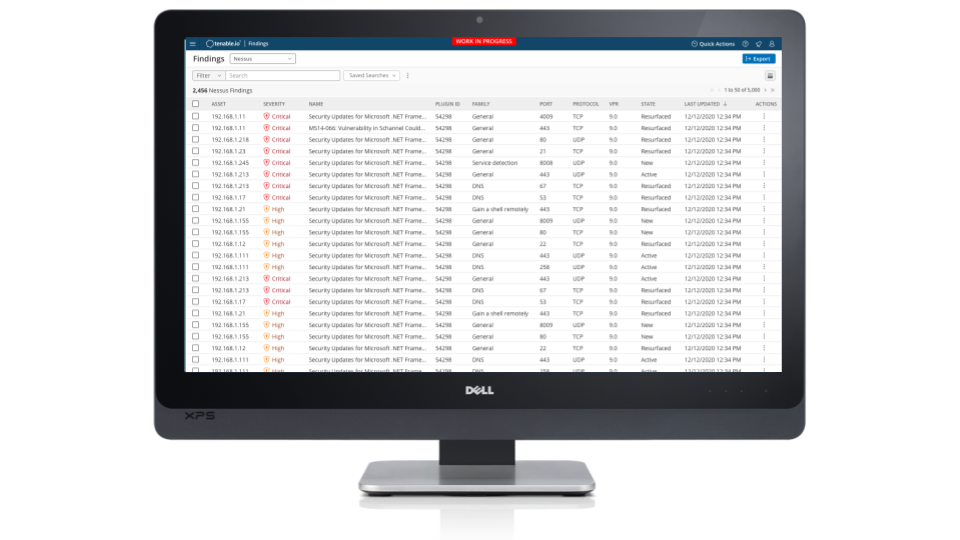
Refined MVP Scope
-
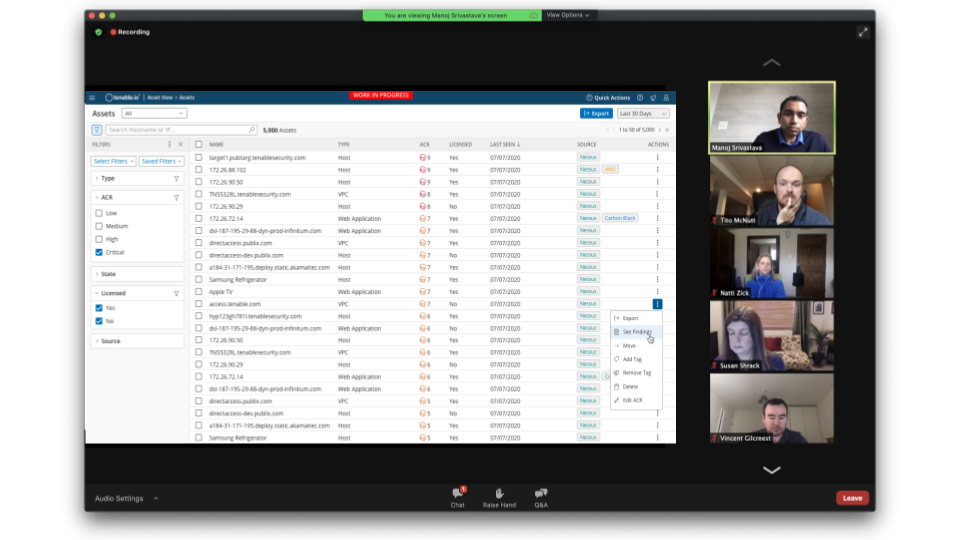
Executive Presentation
Measurable Impact
Within the first two quarters following launch, internal telemetry and customer feedback indicated:
~40% reduction in manual export-to-spreadsheet workflows
~30% decrease in time-to-prioritize critical findings across workspaces
60%+ adoption of the Unified Asset View among active enterprise accounts
~25% reduction in support requests related to cross-workspace reporting
Organizationally, the initiative reduced MVP definition cycles from 6–8 weeks to 2 weeks and secured executive approval within a single quarterly planning cycle.
The Universal Workspace accelerated decision-making across Tenable’s largest customers.
Organizational Impact
The Universal Workspace redefined how UX participated in platform-level decisions at Tenable, shifting the organization from reactive design execution to proactive product shaping. By aligning stakeholders before presenting to executives, we secured approval during quarterly planning to implement the Universal Workspace in the following quarter. The initiative shifted UX from execution partner to strategic contributor in defining platform direction. More importantly, it reframed Tenable’s product narrative from a collection of tools to an emerging platform.
Foundation for Scale
The Universal Workspace established the foundation for cross-product asset visibility, unified findings prioritization, and portfolio-wide navigation cohesion, enabling scalable expansion across Tenable’s product suite.